- Sectors
Cross-sector versatility of ultrafiltration
Ultrafiltration provides an exceptionally adaptable physical separation barrier tailored to the demanding realities of modern industry.
Whether extracting valuable proteins and dairy fats, recovering heat and synthetic fibres from high-volume industrial laundries, or intercepting complex inks, starches, and particulates in heavy packaging operations, our membrane solutions convert effluent into reusable process streams.
Ultrafiltration consistently delivers sterile permeate, shields downstream equipment, reduces chemical and biological loading, and turns continuous waste into quantifiable resource savings.
- Benefits

A clarified, largely sterile permeate suitable for direct reuse in many non-product-contact applications, often without further treatment.

A concentrated reject stream that may be small and valuable enough—containing proteins or fibres, for example—to recover rather than treat as waste.

Protection for downstream membranes and equipment—UF removes fats, proteins, and solids before they can foul subsequent processes.

Reduced COD/BOD loading because fats, proteins, and solids often account for a significant share of a stream's organic load. Physically removing them, rather than relying on biological treatment, reduces the burden on downstream processes and can lower effluent surcharge costs.
- Sector 01
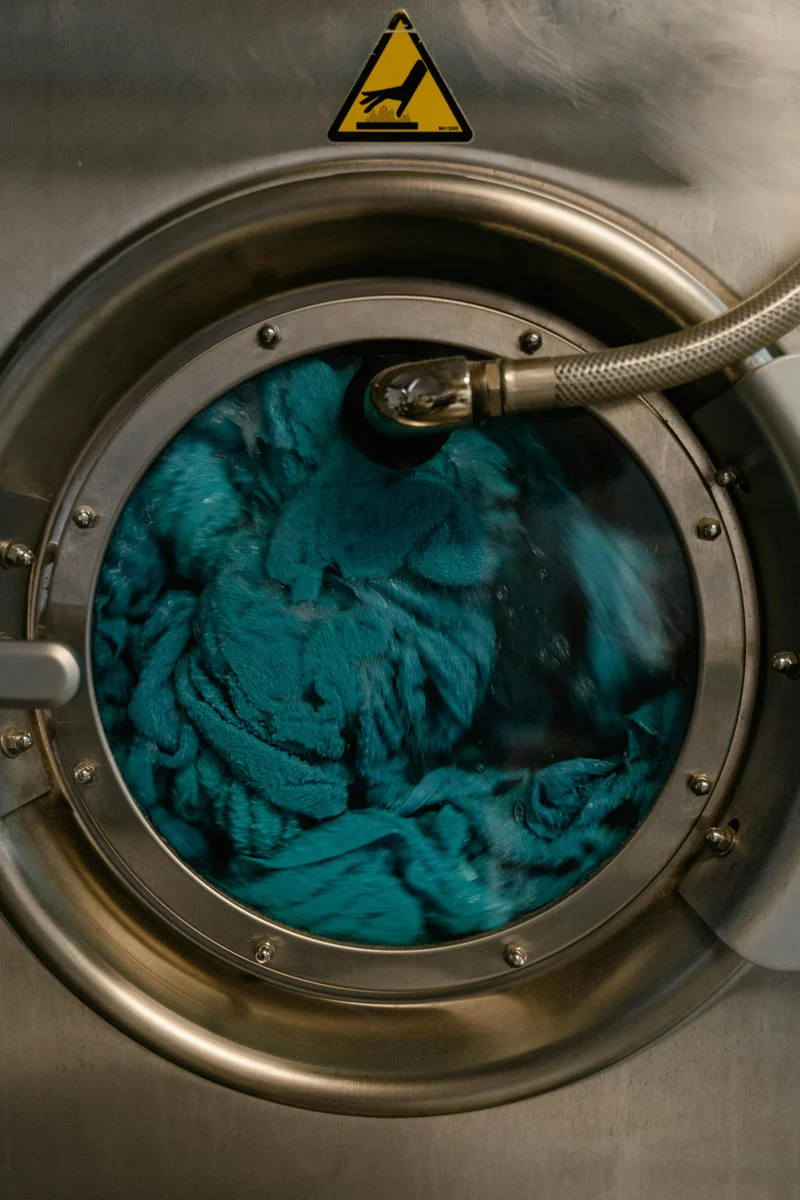
Industrial Laundry
UF Retains: lint and textile fibres, free/emulsified oils and grease (workwear soiled with mineral oil, metalworking fluids, grease), suspended solids, detergent-associated particulates, bacteria.
Heat Retention – UF treats the hot stream directly without needing to cool the full wastewater flow first, the thermal value embedded in that water is preserved rather than lost to drain. A single 10 m³/h line recovering 90% of its hot water can retain on the order of 1.4 GWh of thermal energy a year — which translates directly into avoided boiler gas, not just avoided water purchase. At the scale national laundry operators run at (many sites, continuous shift patterns), this heat-plus-water combination is usually worth more than the water saving alone.
Microfibre/microplastic capture is a growing, specific driver in this sector because synthetic workwear and linen shed polymer fibres on every wash. UF physically intercepts this fibre-rich material and routes it into a concentrated residual stream rather than letting it recirculate with reused water — a capture performance that can be targeted and verified (≥90% as a baseline design objective, with matched influent/permeate/concentrate sampling to prove it). This matters increasingly for ESG reporting and tender requirements from corporate and public-sector laundry contracts.
Reduces load on downstream treatment and compliance exposure. Stripping fibres, fats and solids before any biological or chemical end-of-pipe stage cuts the COD/TSS mass load reaching that stage, which lowers trade-effluent surcharges and reduces the risk of consent breaches from fibre/fat-driven blockages — a known operational headache at this scale.
- Sector 02
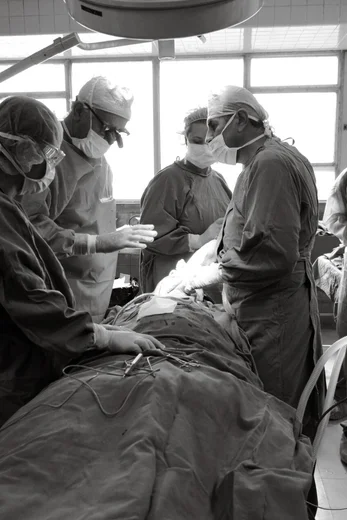
Hospital & Care Laundry
UF Retains: lint/fibre, blood and body-fluid-derived protein residues, disinfectant-associated particulates, bacteria and pathogens (including, critically, resistant organisms).
UF Heat recovery value is proportionally even higher here than in standard commercial laundry, because infection-control thermal disinfection cycles (HTM 01-04 typically requires 65°C for ≥10 minutes or 71°C for ≥3 minutes) run hotter and more consistently than a typical commercial wash programme. That consistent hot discharge is an unusually good heat-recovery feedstock.
The pathogen barrier is the argument that actually matters to an infection control team, not just a nice-to-have. UF’s absolute pore-size cut gives a genuine, physically-guaranteed log-reduction of bacteria — a defensible basis for proposing reuse of recovered water into non-critical stages (pre-wash, sluice makeup, boiler feed pre-treatment) in a way that a purely chemical disinfection claim wouldn’t carry the same weight for.
UF provides an Institutional driver beyond cost: Greener Public Sector / Net Zero commitments give NHS trusts and Private Sector Care an explicit sustainability reporting reason to pursue water and carbon savings from heat recovery, on top of the straightforward utility cost case.
Automated, low-intervention operation matters. Estates teams are generally not resourced for intensive plant operations, so UF systems that self-cleans and reliably returns to baseline flow after every backwash (without an operator intervening) is a practical requirement, not a preference.
- Sector 03
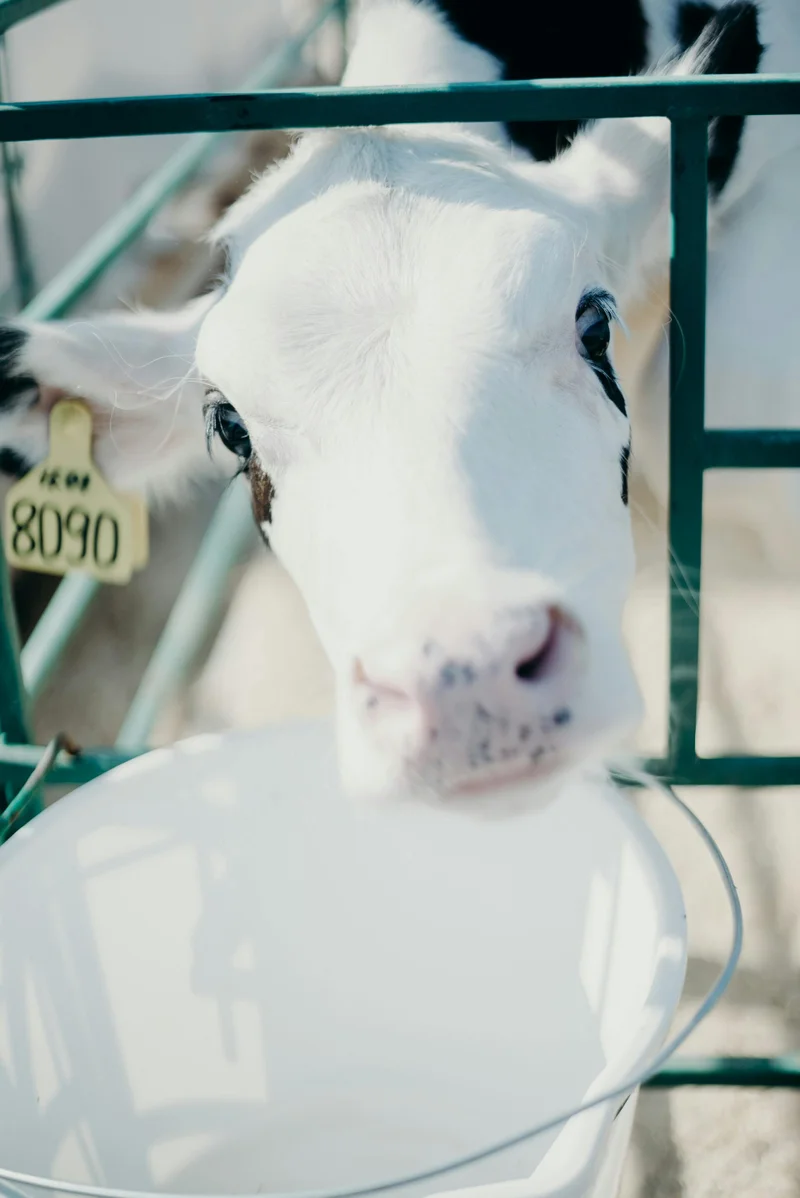
Dairy Production
UF Retains: milk fat globules, casein/whey protein, curd fines, bacteria (including pathogens of real concern in a dairy – Listeria, E. coli).
Fat and protein are usually the single biggest COD contributors in dairy effluent – in most dairy effluent, fat and protein together are a bigger share of the organic load than lactose removing them physically via UF takes a large bite out of COD/BOD before biological treatment even starts, directly reducing trade effluent charges.
Bacterial removal is particularly valuable given dairy’s hygiene-sensitive environment — UF permeate is a safe basis for CIP pre-rinse, floor washdown, and cooling tower makeup.
Where whey is present, UF is doubly relevant: many dairies already use UF on product to recover whey protein concentrate — the same technology applied to general wastewater is a natural extension the operator likely already understands.
Pathogen removal matters as a defensible, physical barrier is the basis for proposing reuse of recovered water into CIP pre-rinse, floor washdown, or cooling makeup in a hygiene-sensitive environment, rather than relying on disinfectant dosing alone.
Heat recovery – Pasteurisation, CIP, and hot rinse water all run at meaningful temperature, and UF-recovered permeate carries that thermal value back to the process rather than losing it to drain.
UF genuinely resolves most of the COD problem rather than as just a clarifying stage.
- Sector 04
Food Processing
UF Retains: milk fat globules, casein/whey protein, curd fines, bacteria.
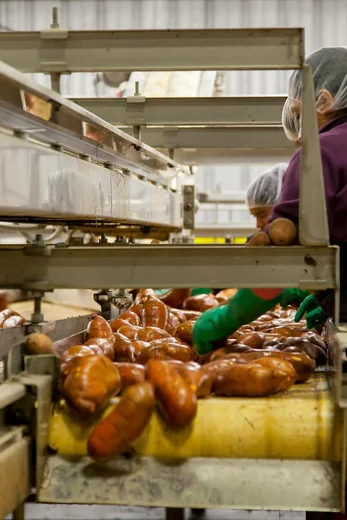
This is where UF earns its keep most dramatically: FOG and protein removal cuts COD/BOD by a large margin, since these are often the dominant load in meat/food effluent.
Reliable pathogen log-reduction (an absolute physical barrier, not a biological kill mechanism) is the key argument for any reuse consideration in a meat facility — regulators and food safety teams want a defensible barrier, and UF gives them one. – ready-to-eat and deli-style further-processing plants carry some of the strictest pathogen policies in the entire food sector – Listeria monocytogenes in particular is treated as effectively zero-tolerance in RTE meat products, often with tighter environmental monitoring regimes than primary slaughter facilities run. UF provides an absolute physical pathogen barrier.
Clarified permeate is also far less likely to foul heat exchangers, which is what makes heat recovery from hot wash-down or CIP water realistic in this sector.
Heat recovery – Scald tanks (poultry), hot CIP cycles, and rendering all run at meaningful temperature, so UF-recovered permeate carries real thermal value back to the process.
Marinades, brines and curing solutions – spillage and tank changeovers introduce acidic streams, salt-heavy curing brines (nitrite/nitrate-based for cured products), and spice/flavouring particulates – UF addresses pH-swing and brine-segregation considerations.
Fat emulsification in comminated products: Sausage, burger and similar mixed/formed products deliberately emulsify fat into the protein/water matrix during mixing – these are UF removable loads.
- Sector 05
Beverage Manufacturing
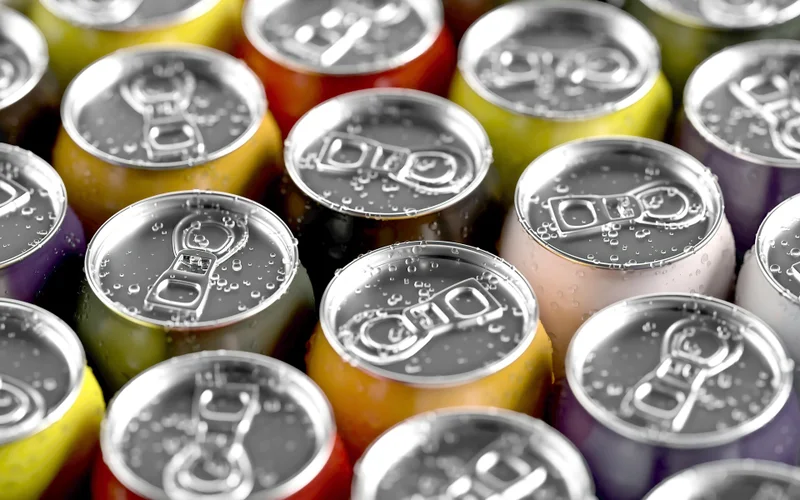
UF Retains: fine solids, label/glue residues, PET fines, colloidal matter, bacteria.
UF gives the hygiene assurance needed before any water goes back into a food-contact-adjacent area, even where full product-contact reuse remains off the table for regulatory reasons.
Beverage wastewater is mostly soluble sugar rather than particulate load, so UF’s role here is less about stripping COD and more about clarification and disinfection.
The biggest reuse opportunity in beverage plants is usually RO/softener reject from the on-site water treatment plant — UF is the ideal polishing step to make that reject (and general process wastewater) safe and clear enough for reuse in many ways.
- Sector 06
Brewing & Distilling
UF Retains: milk fat globules, casein/whey protein, curd fines, bacteria.
Brewery/distillery effluent (especially pot ale) is extremely high-strength and can be biologically challenging at high concentration — UF removes the solids load that would otherwise foul or overload an anaerobic digester (UASB), improving treatment reliability rather than replacing it.
A clarified, low-solids, largely sterile permeate is well suited to CIP pre-rinse and general utility reuse.

- Sector 07
Corrugated Packaging
UF Retains: fibre fines, starch solids, ink pigment particles, wax/coating residues.
Starch-heavy wastewater here is highly biodegradable, but fibre and ink solids are the main practical nuisance — causing blockages and colour problems that often show up directly in discharge consent breaches.
Colour removal is a specific, quantifiable win: ink pigment is a suspended/colloidal solid that UF captures effectively, directly addressing a common consent parameter that biological treatment alone struggles with.
Clarified permeate is well suited to starch kitchen makeup water and general corrugator wash water reuse.

- Sector 08
Pulp & Paper Processing
UF Retains: fibre fines, filler particles (calcium carbonate, clay/kaolin), ink particles (deinking), starch and coating solids, higher-molecular-weight lignin fragments, bacteria.
Paper machine Whitewater (any mill type) carries fibre fines and filler that would otherwise be lost. UF-based clarification is essentially an upgrade on the traditional “save-all” (disc filter/DAF) systems mills already run, capturing a finer fraction of fibre and filler than conventional save-alls can.
Aside from environmental value, UF provides direct raw-material recovery, not just a waste-reduction measure. Recovered fibre fines and filler returned to the stock system reduce virgin fibre and filler purchase, which is a huge cost offset.
UF-clarified Whitewater is the standard enabling step that lets a mill push recycle rates higher without fibre/filler fouling the recycled loop or degrading sheet quality.
Mechanical pulping wastewater is comparatively solids and extractives dominated so UF has real, direct value stripping fibre fines and resin/fatty-acid-derived colloidal material.
Can we help you in your sector?
We’re sure about it..
Complete our Sector Specific Questionnaire